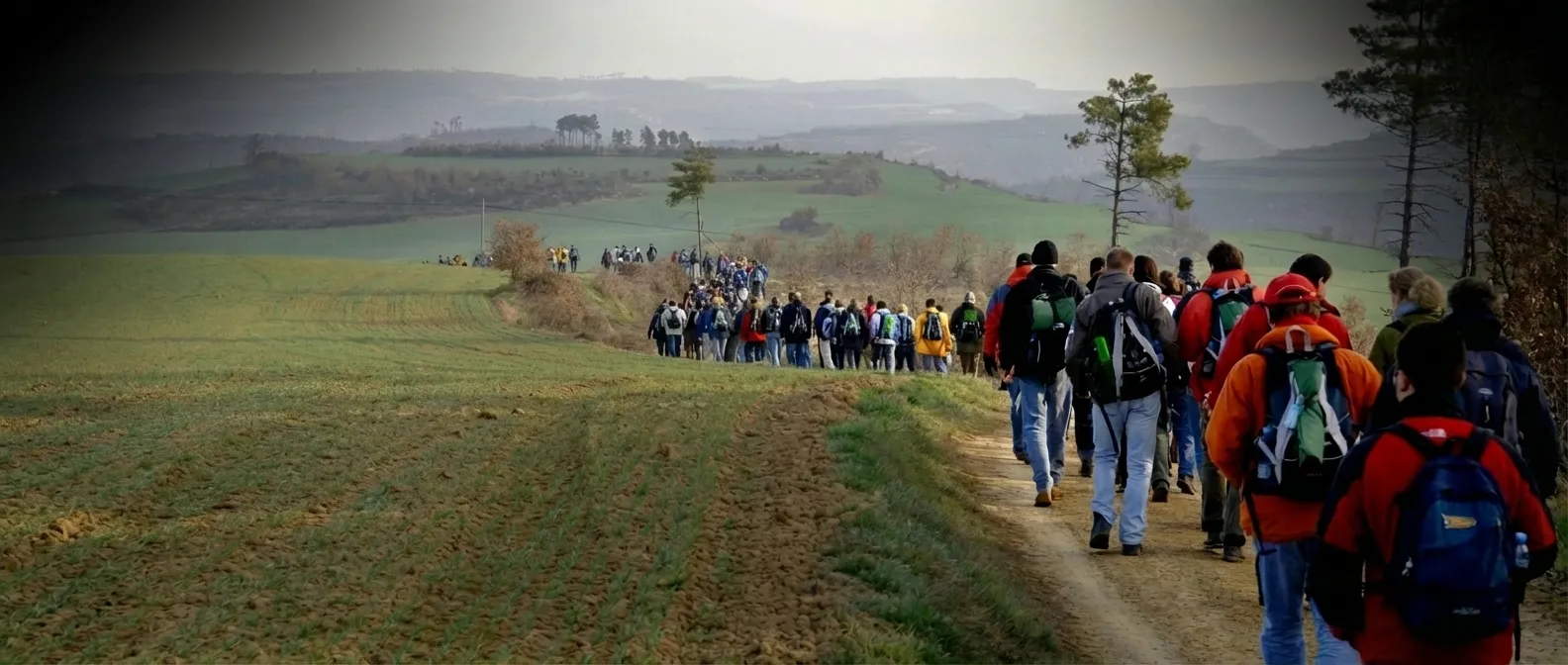
we step into the natural environment to move away from everyday life, from the usual ways of living, working and relating. for its beneficial effects on wellbeing, performance, and physical, mental, relational and spiritual health. to activate all the senses.
nature as methodology
at La Nomàdica, the natural environment is not a backdrop, an aesthetic, inspirational or recreational add-on.
stepping out of the usual context is not a symbolic gesture. it is not escaping reality. it is creating the necessary distance to look at it better. it is methodology.
when a team remains in the same setting, it often ends up repeating the same way of functioning. the same patterns. the same conversations. the same tensions. the same silences. the same automatic responses.
space conditions us. rhythm conditions us. the screen conditions us. urgency conditions us. role conditions us. routine conditions us.
the natural environment changes this system of conditions. it offers a quality of presence that the usual corporate context often makes difficult.
it lowers the noise. changes the rhythm. activates the body. awakens the senses. opens attention. creates perspective. introduces a physical and mental distance from the day to day.
reconnecting with simplicity to navigate complexity
simplicity does not remove complexity. it prevents complexity from dominating us.
much of what wears teams down is not only complexity itself. it is overload. dispersion. ingrained habits. excess stimuli. the difficulty of knowing what truly matters.
reconnecting with simplicity does not mean simplifying reality.
it means finding the right moment, place and people to clarify what is essential.
what matters now?
what needs attention?
what do we need to stop?
what do we need to sustain?
what is the next step?
going into the natural environment is not escape. it is efficiency.
we step into nature because not everything depends only on people’s will, but also on the conditions in which people find themselves.
by changing the conditions — often easier than changing people — availability changes: we listen, observe, converse, decide and expose ourselves differently.
a team learns from what it does when the context changes, when uncertainty appears, when the rhythm shifts, when it must orient itself, decide, listen, wait, adapt or take care of the whole.
it is not about idealising nature. it is about understanding what it enables.
increasingly, research, public policy and organisations recognise the value of nature-based solutions in areas such as wellbeing, health, performance, creativity, cohesion, trust, resilience and leadership.
what was long perceived as intuition is now beginning to occupy a more solid place: the natural environment can help people and teams regulate better, think more clearly, communicate with more quality and build more consistent bonds.
at an individual level, immersion in the natural environment can support emotional self-management, creativity, resilience, body awareness, satisfaction with the experience and deeper engagement with the process.
at a team level, it can foster greater cohesion, mutual trust, better communication, deeper listening, stronger adaptability and a clearer understanding of the relational patterns that shape collective performance.
for all these reasons, nature is non-negotiable in our methodology.
not because it is more pleasant. though it is.
not because it makes things more inspiring. though it does.
not because it helps people disconnect. though it does.
but because it creates the conditions for the work to be more honest, deeper and more transferable. ultimately, because it allows the programme, the team and the people to unfold their full potential.
what immersion in the natural environment enables
reducing noise, dispersion and reactivity.
stepping out of daily automatisms.
activating the body, the senses and attention.
broadening perspective on the challenge.
encouraging more honest and deeper conversations.
making real team dynamics visible.
generating more trust and relational availability.
improving communication and the quality of listening.
strengthening emotional self-management and resilience.
facilitating creativity, adaptation and decision-making.
giving more memory to what is lived, discussed and agreed.
turning experience into transferable learning.