map it, walk it.
map it, walk it.
impact area
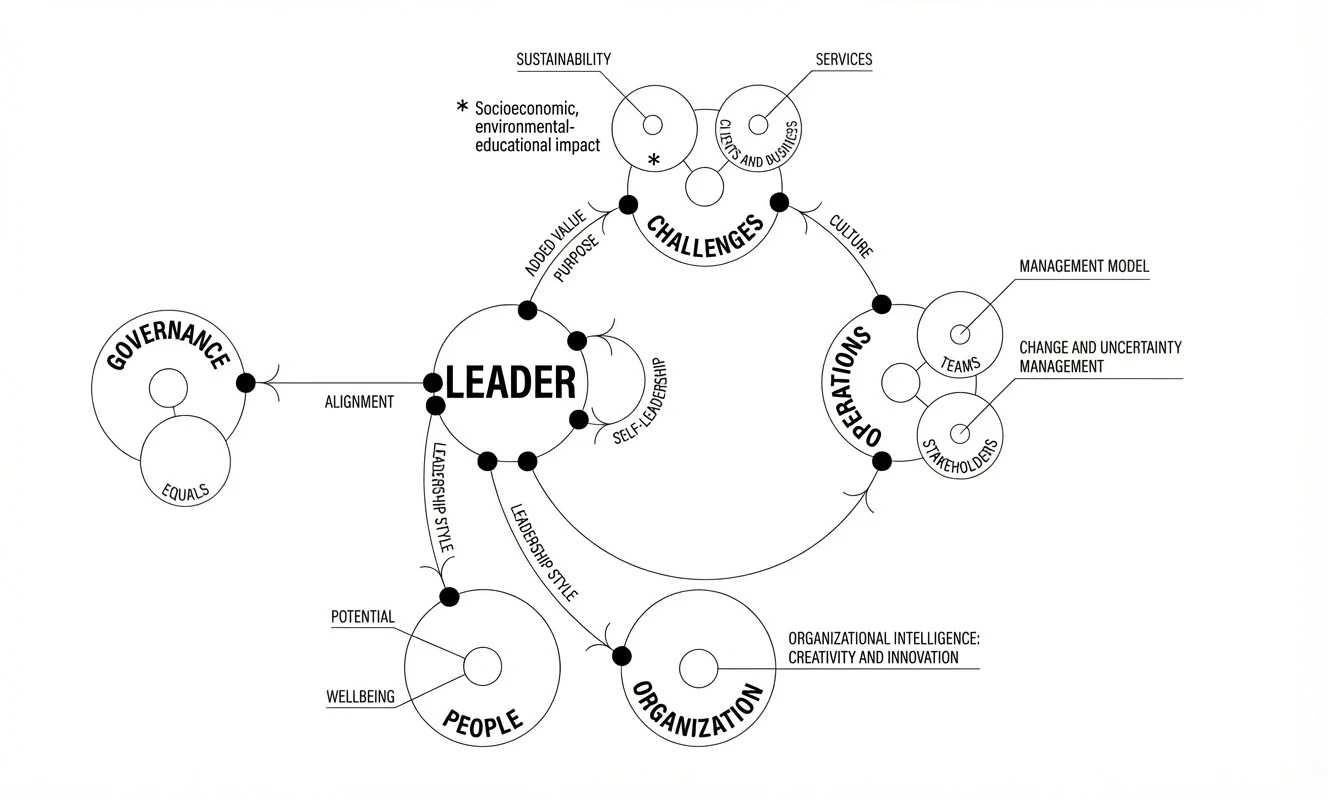
we call mapping, or “map it”, the exercise of understanding how a system works and within it, in order to bring context, clarity, direction, a sense of urgency and the ability to properly focus on the area of impact of a challenge.
impact area
we call mapping, or “map it”, the exercise of understanding how a system works and within it, in order to bring context, clarity, direction, a sense of urgency and the ability to properly focus on the area of impact of a challenge.
La Nomàdica
La Nomàdica
La Nomàdica
La Nomàdica
map the system, define:
01
impact area
clarify the domains of the challenge
02
challenge
03
scope
04
resources
05
sense of urgency
01
impact area
clarify the domains of the challenge
02
challenge
03
scope
04
resources
05
sense of urgency
map it, walk it.
map it, walk it.
spark-move-sustain
spark-move-sustain
spark-move-sustain
we refer as “walk it” the process of turning ideas into action, and action into results, learning, and sustainable ways of working. we unfold it through three consecutive movements, each one a consequence of the previous, creating a clear progression. we do so through two cross-cutting conditions: itinerancy and immersion in nature, which provide grounding and depth.
we refer as “walk it” the process of turning ideas into action, and action into results, learning, and sustainable ways of working. we unfold it through three consecutive movements, each one a consequence of the previous, creating a clear progression. we do so through two cross-cutting conditions: itinerancy and immersion in nature, which provide grounding and depth.
SPARK–MOVE–SUSTAIN is the framework that structures how we approach any challenge, regardless of the duration of the intervention. It is a natural, inclusive, coherent, and repeatable process that draws on nearly three decades of experience and is driven by a single obsession: simplifying complexity.
It allows us to work with a clear, consistent, and recognizable structure while giving teams the freedom to activate their own level of self-management. In doing so, we make better use of time, resources, and collective energy, while keeping a constant focus on shared objectives.
the result is a functional, inclusive, and impactful experience; well designed, meaningful, and capable of generating real transfer into everyday practice.
how do we create the right conditions to face a challenge?
spark
consequence of a challenge
SPARK includes the initial diagnosis, preliminary conversations with key stakeholders, an assessment of the team's current situation, the definition of objectives, the identification of tensions, the framing of the challenge, the creation of a sense of urgency, and the design of the work sequence.
what do we need to discuss, decide, or practice in order to move forward meaningfully?
in practice, this is the moment to create the right context for the team to understand the purpose of the proposal, trust the process and the people involved, and be willing to participate with presence, openness, and commitment.
expectations are shared, alliances are established, and key moments and challenges are reviewed. ultimately, it is about mobilizing and aligning the team.
what do we propose?
abstraction: disconnect to connect; change the environment to change presence.
we take the team out of its routines and everyday surroundings and immerse it in a new context, intentionally designed to generate curiosity, attention, and readiness.
the welcome, the care, and the way we receive people make it clear, without needing to say it explicitly, that everything has been thoughtfully designed so that what happens has meaning and value.
what are we seeking?
reflection, conversation, and commitment: aligning intention, energy, and clarity.
we seek to help each person become aware of what the session can contribute, both individually and collectively, while recognizing that the impact of the experience will be proportional to the attitude, energy, and commitment they choose to bring.
spark looks at where we come from and where we want to go. it prepares the ground so that everyone can place their focus and potential at the service of the process, the group, and the shared objectives.
how do we create the right conditions to face a challenge?
spark
consequence of a challenge
SPARK includes the initial diagnosis, preliminary conversations with key stakeholders, an assessment of the team's current situation, the definition of objectives, the identification of tensions, the framing of the challenge, the creation of a sense of urgency, and the design of the work sequence.
what do we need to discuss, decide, or practice in order to move forward meaningfully?
in practice, this is the moment to create the right context for the team to understand the purpose of the proposal, trust the process and the people involved, and be willing to participate with presence, openness, and commitment.
expectations are shared, alliances are established, and key moments and challenges are reviewed. ultimately, it is about mobilizing and aligning the team.
what do we propose?
abstraction: disconnect to connect; change the environment to change presence.
we take the team out of its routines and everyday surroundings and immerse it in a new context, intentionally designed to generate curiosity, attention, and readiness.
the welcome, the care, and the way we receive people make it clear, without needing to say it explicitly, that everything has been thoughtfully designed so that what happens has meaning and value.
what are we seeking?
reflection, conversation, and commitment: aligning intention, energy, and clarity.
we seek to help each person become aware of what the session can contribute, both individually and collectively, while recognizing that the impact of the experience will be proportional to the attitude, energy, and commitment they choose to bring.
spark looks at where we come from and where we want to go. it prepares the ground so that everyone can place their focus and potential at the service of the process, the group, and the shared objectives.
how do we create the right conditions to face a challenge?
spark
consequence of a challenge
SPARK includes the initial diagnosis, preliminary conversations with key stakeholders, an assessment of the team's current situation, the definition of objectives, the identification of tensions, the framing of the challenge, the creation of a sense of urgency, and the design of the work sequence.
what do we need to discuss, decide, or practice in order to move forward meaningfully?
in practice, this is the moment to create the right context for the team to understand the purpose of the proposal, trust the process and the people involved, and be willing to participate with presence, openness, and commitment.
expectations are shared, alliances are established, and key moments and challenges are reviewed. ultimately, it is about mobilizing and aligning the team.
what do we propose?
abstraction: disconnect to connect; change the environment to change presence.
we take the team out of its routines and everyday surroundings and immerse it in a new context, intentionally designed to generate curiosity, attention, and readiness.
the welcome, the care, and the way we receive people make it clear, without needing to say it explicitly, that everything has been thoughtfully designed so that what happens has meaning and value.
what are we seeking?
reflection, conversation, and commitment: aligning intention, energy, and clarity.
we seek to help each person become aware of what the session can contribute, both individually and collectively, while recognizing that the impact of the experience will be proportional to the attitude, energy, and commitment they choose to bring.
spark looks at where we come from and where we want to go. it prepares the ground so that everyone can place their focus and potential at the service of the process, the group, and the shared objectives.
how do we turn purpose into action?
move
consequence of spark
MOVE is the moment when plans are put into action, leadership is placed in service of shared agreements, and initial intentions are transformed into visible behaviours, decisions, and results.
in practice, it is the core of the process: the moment when the team enters the experience, sets the challenge in motion, and makes its real way of operating visible. movement is not only physical. it is also cognitive, emotional, relational, and organisational.
move is not about doing things. it is about moving the process forward.
the team walks, talks, observes, challenges assumptions, makes decisions, participates, pauses, and moves forward again. every moment serves a purpose: each stop opens a conversation, each change of scenery helps unlock a new perspective, and each stage of the journey corresponds to a stage of the work.
what do we propose?
mobilisation: activating the group through questions, conversations, working dynamics, and real learning situations that, throughout the journey, make visible the realities and working culture of the team.
what are we seeking?
to bring to light what often remains hidden in everyday work: what drives collective performance, what limits it, which decisions are made well, which conversations are missing, and which behaviours need to be strengthened or transformed.
we seek to help the team see itself in action as it truly is: with its strengths, tensions, blockages, leadership dynamics, coordination habits, and operating patterns.
move enables the team not only to talk about how it functions, but to see it, experience it, and begin to transform it.
how do we turn purpose into action?
move
consequence of spark
MOVE is the moment when plans are put into action, leadership is placed in service of shared agreements, and initial intentions are transformed into visible behaviours, decisions, and results.
in practice, it is the core of the process: the moment when the team enters the experience, sets the challenge in motion, and makes its real way of operating visible. movement is not only physical. it is also cognitive, emotional, relational, and organisational.
move is not about doing things. it is about moving the process forward.
the team walks, talks, observes, challenges assumptions, makes decisions, participates, pauses, and moves forward again. every moment serves a purpose: each stop opens a conversation, each change of scenery helps unlock a new perspective, and each stage of the journey corresponds to a stage of the work.
what do we propose?
mobilisation: activating the group through questions, conversations, working dynamics, and real learning situations that, throughout the journey, make visible the realities and working culture of the team.
what are we seeking?
to bring to light what often remains hidden in everyday work: what drives collective performance, what limits it, which decisions are made well, which conversations are missing, and which behaviours need to be strengthened or transformed.
we seek to help the team see itself in action as it truly is: with its strengths, tensions, blockages, leadership dynamics, coordination habits, and operating patterns.
move enables the team not only to talk about how it functions, but to see it, experience it, and begin to transform it.
how do we turn purpose into action?
move
consequence of spark
MOVE is the moment when plans are put into action, leadership is placed in service of shared agreements, and initial intentions are transformed into visible behaviours, decisions, and results.
in practice, it is the core of the process: the moment when the team enters the experience, sets the challenge in motion, and makes its real way of operating visible. movement is not only physical. it is also cognitive, emotional, relational, and organisational.
move is not about doing things. it is about moving the process forward.
the team walks, talks, observes, challenges assumptions, makes decisions, participates, pauses, and moves forward again. every moment serves a purpose: each stop opens a conversation, each change of scenery helps unlock a new perspective, and each stage of the journey corresponds to a stage of the work.
what do we propose?
mobilisation: activating the group through questions, conversations, working dynamics, and real learning situations that, throughout the journey, make visible the realities and working culture of the team.
what are we seeking?
to bring to light what often remains hidden in everyday work: what drives collective performance, what limits it, which decisions are made well, which conversations are missing, and which behaviours need to be strengthened or transformed.
we seek to help the team see itself in action as it truly is: with its strengths, tensions, blockages, leadership dynamics, coordination habits, and operating patterns.
move enables the team not only to talk about how it functions, but to see it, experience it, and begin to transform it.
how do we consolidate and ensure momentum is not lost?
sustain
consequence of move
SUSTAIN is the moment when experience becomes transfer: ensuring that what the team has seen, understood, and decided does not remain merely a positive memory, but takes shape as criteria, habits, agreements, and action.
sustain is not about closing the experience. it is about ensuring that what has happened can take root. what needs to change, continue, or be activated from this point forward?
in practice, this is the phase in which the team synthesises what has happened, integrates learning, makes decisions, assigns responsibilities, and defines how to sustain the work that has been done.
what do we propose?
transfer: turning what has been experienced and what has emerged into concrete, clear, useful, and achievable decisions; who will do it, when it will be done, and how we will know it is working.
what are we seeking?
to consolidate ways of working, habits, and culture, ensuring that learning does not fade into routine.
we seek to help the team establish a clearer, more coherent, and more sustainable way of relating, deciding, collaborating, and moving forward together, with better-aligned processes, more conscious habits, stable indicators, more distributed leadership, and a stronger capacity for self-management.
how do we close it?
recognition: expressing gratitude, acknowledging value, and sustaining connection.
we create a final space for the team to listen to and recognise one another: what we have experienced, what we are taking with us, what made it possible, what we want to appreciate, and what we want to continue sustaining from tomorrow onwards.
it is a moment of care, emotional safety, and collective reflection, designed to reinforce collective confidence, motivation, and authentic relationships within the group.
it is also the moment to celebrate progress, recognise shared effort, and bring the experience to a meaningful close.
how do we consolidate and ensure momentum is not lost?
sustain
consequence of move
SUSTAIN is the moment when experience becomes transfer: ensuring that what the team has seen, understood, and decided does not remain merely a positive memory, but takes shape as criteria, habits, agreements, and action.
sustain is not about closing the experience. it is about ensuring that what has happened can take root. what needs to change, continue, or be activated from this point forward?
in practice, this is the phase in which the team synthesises what has happened, integrates learning, makes decisions, assigns responsibilities, and defines how to sustain the work that has been done.
what do we propose?
transfer: turning what has been experienced and what has emerged into concrete, clear, useful, and achievable decisions; who will do it, when it will be done, and how we will know it is working.
what are we seeking?
to consolidate ways of working, habits, and culture, ensuring that learning does not fade into routine.
we seek to help the team establish a clearer, more coherent, and more sustainable way of relating, deciding, collaborating, and moving forward together, with better-aligned processes, more conscious habits, stable indicators, more distributed leadership, and a stronger capacity for self-management.
how do we close it?
recognition: expressing gratitude, acknowledging value, and sustaining connection.
we create a final space for the team to listen to and recognise one another: what we have experienced, what we are taking with us, what made it possible, what we want to appreciate, and what we want to continue sustaining from tomorrow onwards.
it is a moment of care, emotional safety, and collective reflection, designed to reinforce collective confidence, motivation, and authentic relationships within the group.
it is also the moment to celebrate progress, recognise shared effort, and bring the experience to a meaningful close.
how do we consolidate and ensure momentum is not lost?
sustain
consequence of move
SUSTAIN is the moment when experience becomes transfer: ensuring that what the team has seen, understood, and decided does not remain merely a positive memory, but takes shape as criteria, habits, agreements, and action.
sustain is not about closing the experience. it is about ensuring that what has happened can take root. what needs to change, continue, or be activated from this point forward?
in practice, this is the phase in which the team synthesises what has happened, integrates learning, makes decisions, assigns responsibilities, and defines how to sustain the work that has been done.
what do we propose?
transfer: turning what has been experienced and what has emerged into concrete, clear, useful, and achievable decisions; who will do it, when it will be done, and how we will know it is working.
what are we seeking?
to consolidate ways of working, habits, and culture, ensuring that learning does not fade into routine.
we seek to help the team establish a clearer, more coherent, and more sustainable way of relating, deciding, collaborating, and moving forward together, with better-aligned processes, more conscious habits, stable indicators, more distributed leadership, and a stronger capacity for self-management.
how do we close it?
recognition: expressing gratitude, acknowledging value, and sustaining connection.
we create a final space for the team to listen to and recognise one another: what we have experienced, what we are taking with us, what made it possible, what we want to appreciate, and what we want to continue sustaining from tomorrow onwards.
it is a moment of care, emotional safety, and collective reflection, designed to reinforce collective confidence, motivation, and authentic relationships within the group.
it is also the moment to celebrate progress, recognise shared effort, and bring the experience to a meaningful close.
each stage reduces the distance between the current reality and the ideal state.
what cannot be clearly described as a process can hardly be repeated with success.
what cannot be clearly described as a process can hardly be repeated with success.
trusting a method allows the mind to focus on what truly matters. in it absence, performance rest entirely on inspiration.
trusting a method allows the mind to focus on what truly matters. in it absence, performance rest entirely on inspiration.
© 2025 La Nomàdica
let’s talk.
an open-ended challenge allows for endless ways to approach it
UNA projects
La Nomàdica listens to you and responds with the expertise of our ecosystem
add or connect
if it fits, we co-create; if not, we connect you elsewhere
(+34) 637 854 512
let’s talk.
an open-ended challenge allows for endless ways to approach it
UNA projects
La Nomàdica listens to you and responds with the expertise of our ecosystem
add or connect
if it fits, we co-create; if not, we connect you elsewhere
(+34) 637 854 512
© 2025 La Nomàdica
let’s talk.
an open-ended challenge allows for endless ways to approach it
UNA projects
La Nomàdica listens to you and responds with the expertise of our ecosystem
add or connect
if it fits, we co-create; if not, we connect you elsewhere
(+34) 637 854 512